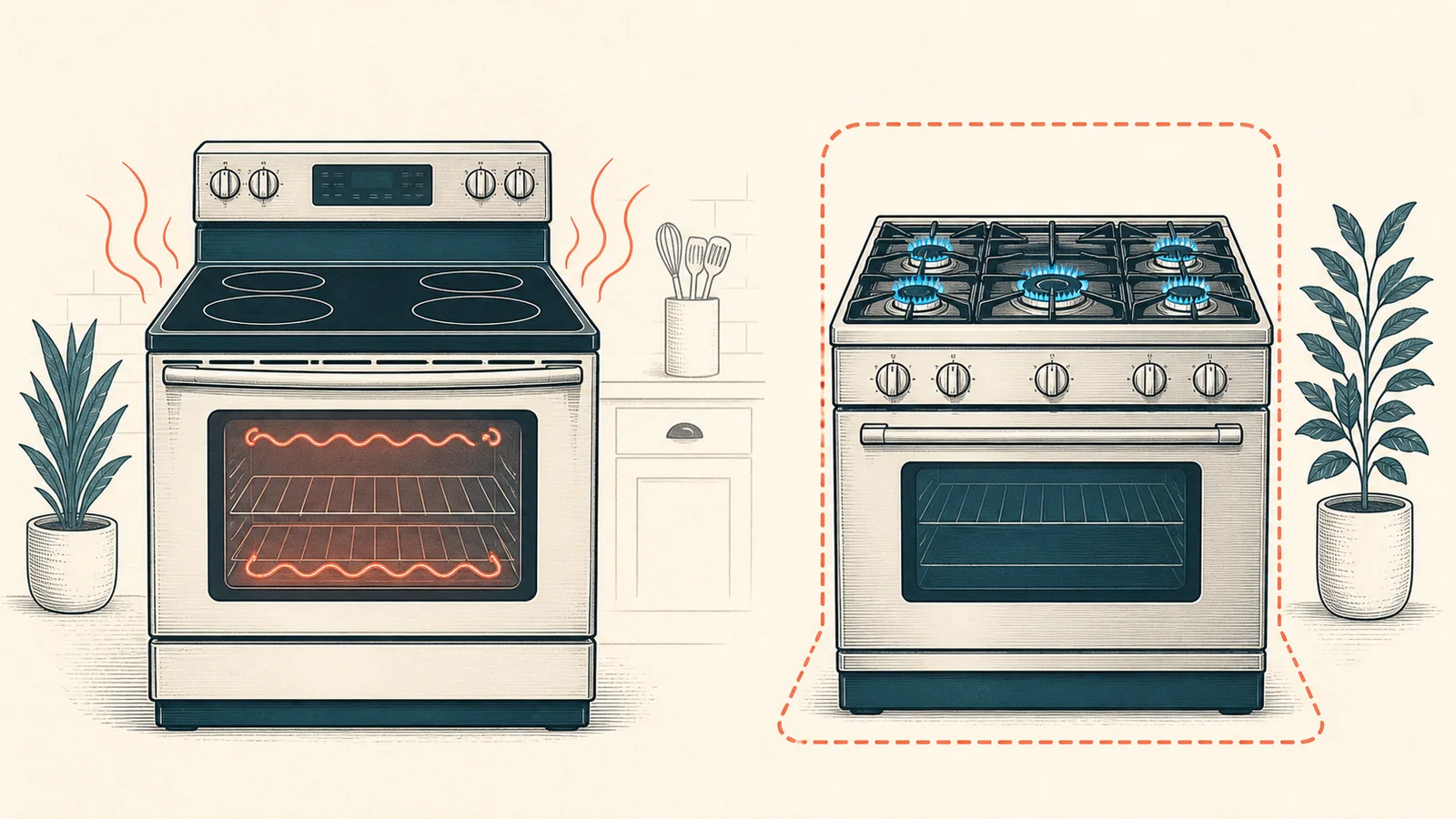
What the symptom may be telling you
Ovens and ranges combine controls, sensors, heat sources, ventilation and safety systems. Gas and electric models require different qualifications, so identify the appliance type before contacting a provider.
- Long preheat or uneven baking can involve calibration, airflow, sensors, elements, ignition or door sealing.
- A gas burner that clicks without lighting differs from delayed ignition or gas odor.
- One electric cooking zone failing differs from the entire appliance losing power.
- Control error codes may reflect a sensed condition, wiring, controls or a temporary fault.
Safe first checks
These observations may help distinguish a simple setup issue from a repair that needs trained diagnosis. Do not remove sealed panels, bypass safety devices, or handle refrigerant, gas, or fixed building wiring.
Identify gas or electric
Confirm the fuel type from the model label and installation. Do not open gas fittings or high-voltage compartments.
Compare more than one use
Record set temperature, preheat indication and cooking result. Avoid placing consumer thermometers where the manufacturer prohibits.
Inspect removable pieces
When fully cool and powered off, check whether caps, grates or removable burner pieces are seated as the manual shows.
Record the exact error
Photograph or write the full code and what the appliance was doing when it appeared.
When to stop troubleshooting
- You smell gas: avoid flames and switches, leave as appropriate and contact the gas utility/emergency service.
- There is arcing, smoke, a glowing connection, damaged cord or repeated breaker trip.
- Ignition is delayed, produces a flash, or flame behavior is abnormal.
- Diagnosis would require live-voltage, gas-pressure or combustion testing.
Information to gather before contacting a provider
Clear details help a provider determine whether the appliance and problem fit its capabilities.
- Model/serial, gas or electric, freestanding/slide-in/wall configuration.
- Which burner, element, oven mode or temperature is affected.
- Exact error code and whether power interruption changes it.
- Recent installation, cleaning cycle, spill, power event or control replacement.
Ready to bring in a professional?
Wesley Chapel Appliance is not yet routing service requests. Use the checklist above when you contact a provider — it is the fastest way to avoid a mismatched visit.
This website is an independent information and referral site, not a repair contractor. When referrals launch it may be paid a referral fee, and that will be disclosed here.
Frequently asked questions
Can I calibrate an oven myself?
Some manufacturers provide user calibration settings, but calibration should not mask an active failure. Follow the exact model manual and record the original setting.
What should I do if I smell gas?
Do not troubleshoot online. Avoid ignition sources and electrical switches, leave the area as appropriate, and contact the gas utility or emergency service.
Does an error code identify the failed part?
Not necessarily. Codes identify conditions detected by the control and usually require model-specific diagnostic procedures.
Does this site dispatch gas-appliance technicians?
No. The site does not currently accept or route service requests.