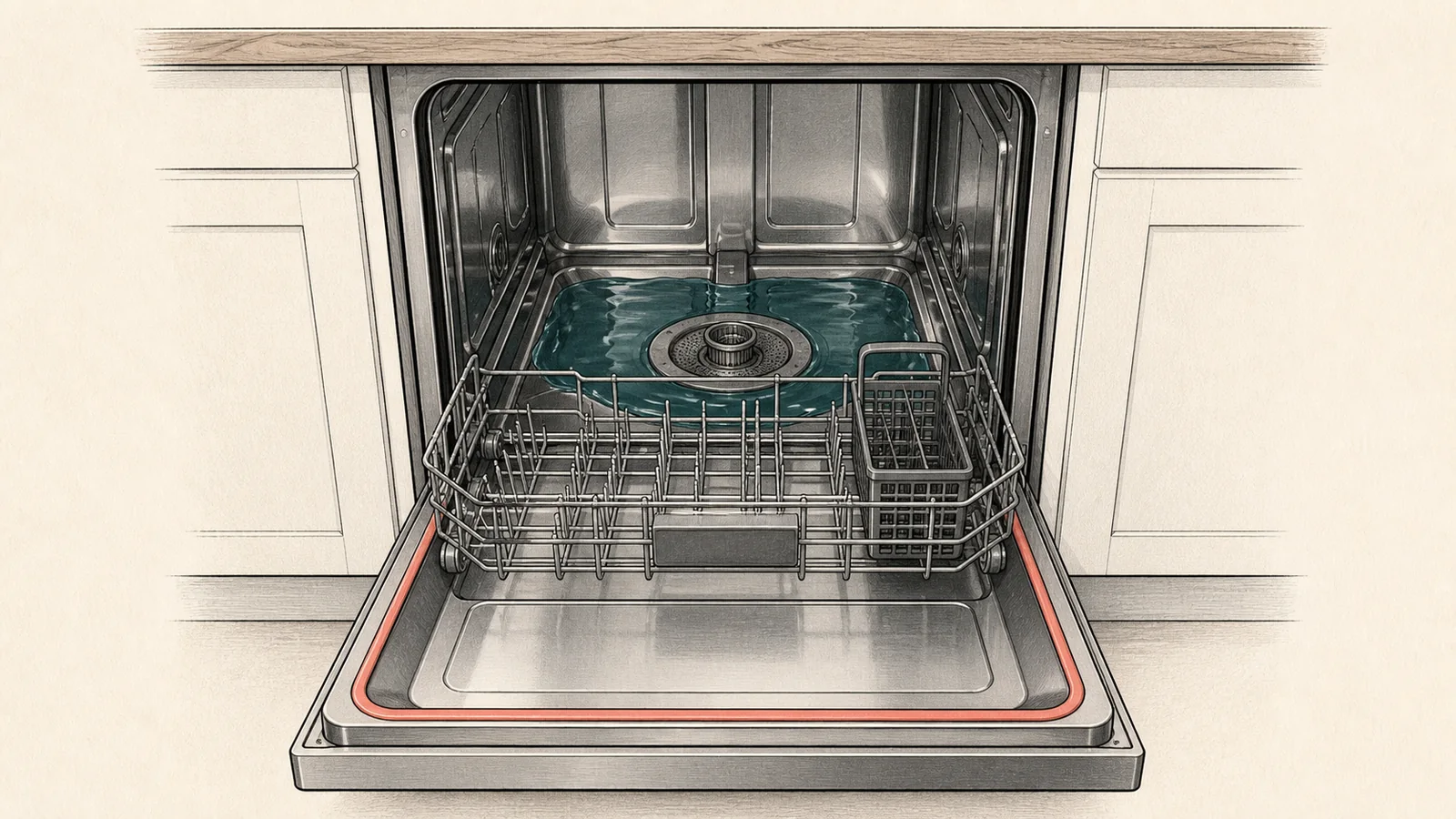
What the symptom may be telling you
Dishwasher performance depends on water supply, spray movement, filtration, detergent, loading, drainage and heat. Several usage and installation conditions can resemble component failure.
- Standing water after an interrupted cycle differs from recurring water after every completed cycle.
- Leaks can originate at the door, supply/drain connections or underneath the unit.
- Residue may relate to loading, blocked spray paths, filter condition, detergent or water conditions.
- Poor drying may reflect cycle selection, rinse aid, loading materials or heating/control issues.
Safe first checks
These observations may help distinguish a simple setup issue from a repair that needs trained diagnosis. Do not remove sealed panels, bypass safety devices, or handle refrigerant, gas, or fixed building wiring.
Confirm the cycle completed
Check for interruption, power loss or an error code. Use cancel/drain only as the manufacturer directs.
Inspect accessible filtration
With power off and the machine cool, follow the owner’s manual for removable-filter inspection and cleaning.
Review loading and spray paths
Make sure tall utensils or pans do not block spray-arm movement or detergent-door opening.
Observe where water appears
Dry the floor, then note whether water appears at the front edge, supply side, drain side or beneath the center. Do not operate during an active leak.
When to stop troubleshooting
- Water is near electrical connections, cabinetry is swelling or the leak continues with the machine off.
- There is a burning odor, repeated breaker trip or melted component.
- Removal would disturb hardwired electrical, plumbing or flooring connections.
- Glass or sharp debris is hidden in water or inaccessible pump areas.
Information to gather before contacting a provider
Clear details help a provider determine whether the appliance and problem fit its capabilities.
- Model/serial and approximate installation age.
- Cycle selected, error code and whether failure occurs during fill, wash, drain or dry.
- Photo of residue or leak location when safe.
- Recent changes in detergent, disposal/plumbing work, water supply or loading habits.
Ready to bring in a professional?
Wesley Chapel Appliance is not yet routing service requests. Use the checklist above when you contact a provider — it is the fastest way to avoid a mismatched visit.
This website is an independent information and referral site, not a repair contractor. When referrals launch it may be paid a referral fee, and that will be disclosed here.
Frequently asked questions
Is a small amount of water near the filter normal?
Some designs retain a small amount of water. Consult the manufacturer documentation; a deep pool, odor or failed drain cycle deserves further evaluation.
Can a garbage-disposal replacement affect dishwasher draining?
Installation and drain routing can affect dishwasher discharge. A qualified installer can verify the connection without assuming the dishwasher itself failed.
Why are plastic items still wet?
Plastic stores less heat than ceramic or glass, so some retained moisture may be normal even when the drying system works.
Can I request dishwasher service from this site?
Not currently. No customer requests are accepted until a transparent provider arrangement is active.
Water-related context: Hard water and dishwasher residue explains what mineral residue can—and cannot—show about an appliance symptom.