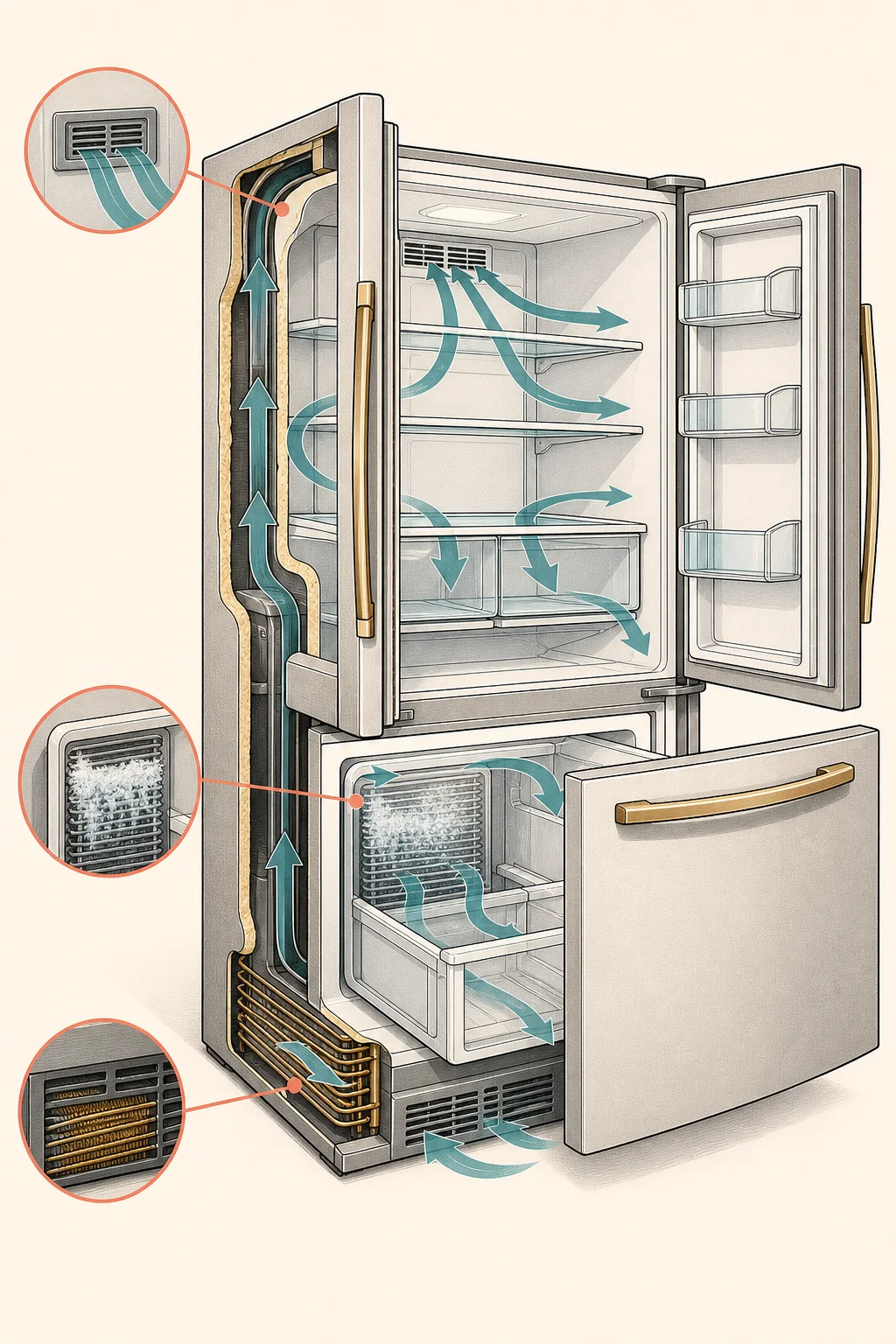
What the symptom may be telling you
Cooling complaints can come from airflow, controls, seals, drainage, fans or sealed refrigeration components. Because these systems interact, one symptom rarely proves one failed part.
- Fresh-food section warm while the freezer remains cold may point toward airflow or defrost issues.
- Both compartments warming may involve power, controls, heat rejection or the sealed refrigeration system.
- Water inside the cabinet can relate to drainage, containers, supply connections or condensation.
- Heavy frost or ice can interfere with airflow and may indicate door-seal, defrost or usage problems.
Safe first checks
These observations may help distinguish a simple setup issue from a repair that needs trained diagnosis. Do not remove sealed panels, bypass safety devices, or handle refrigerant, gas, or fixed building wiring.
Confirm actual temperatures
Use an appliance thermometer rather than touch alone. Keep refrigerator food near 40°F or below and the freezer near 0°F when operating normally.
Check doors and airflow
Look for packages blocking vents, drawers preventing closure, torn gaskets or doors left ajar. Avoid overpacking around vents.
Listen and observe
Record whether fans or the compressor run, whether clicking repeats, and whether the exterior becomes unusually hot.
Protect food first
Move perishable food to safe cold storage if temperatures cannot be maintained. When in doubt, follow USDA food-safety guidance.
When to stop troubleshooting
- There is burning odor, active sparking, smoke or a hot/damaged power cord.
- Water is contacting an outlet, power strip or exposed electrical connection.
- The appliance uses refrigerant and sealed-system gauges, recovery or charging would be required.
- A built-in unit must be moved in a way that risks flooring, water lines or cabinetry.
Information to gather before contacting a provider
Clear details help a provider determine whether the appliance and problem fit its capabilities.
- Model and serial number; approximate age and purchase history.
- Measured refrigerator and freezer temperatures and when they began changing.
- Whether ice production, water dispensing, lights and fans changed at the same time.
- Brand, configuration (top-freezer, side-by-side, French door or built-in) and any error code.
Ready to bring in a professional?
Wesley Chapel Appliance is not yet routing service requests. Use the checklist above when you contact a provider — it is the fastest way to avoid a mismatched visit.
This website is an independent information and referral site, not a repair contractor. When referrals launch it may be paid a referral fee, and that will be disclosed here.
Frequently asked questions
How long should a refrigerator take to cool after being unplugged?
Temperature recovery varies with room temperature, loading and design. Use a thermometer and the manufacturer’s instructions; do not rely on one short observation window.
Does a warm refrigerator always mean the compressor failed?
No. Airflow, defrost, sensors, controls, fans, seals and other causes can create similar symptoms. A qualified diagnosis is needed before condemning a compressor.
Should I keep opening the door to check it?
Limit door openings during a cooling problem. Each opening adds warm humid air and makes trend measurement less useful.
Does this site currently dispatch refrigerator technicians?
No. Wesley Chapel Appliance is not currently accepting or routing service requests.