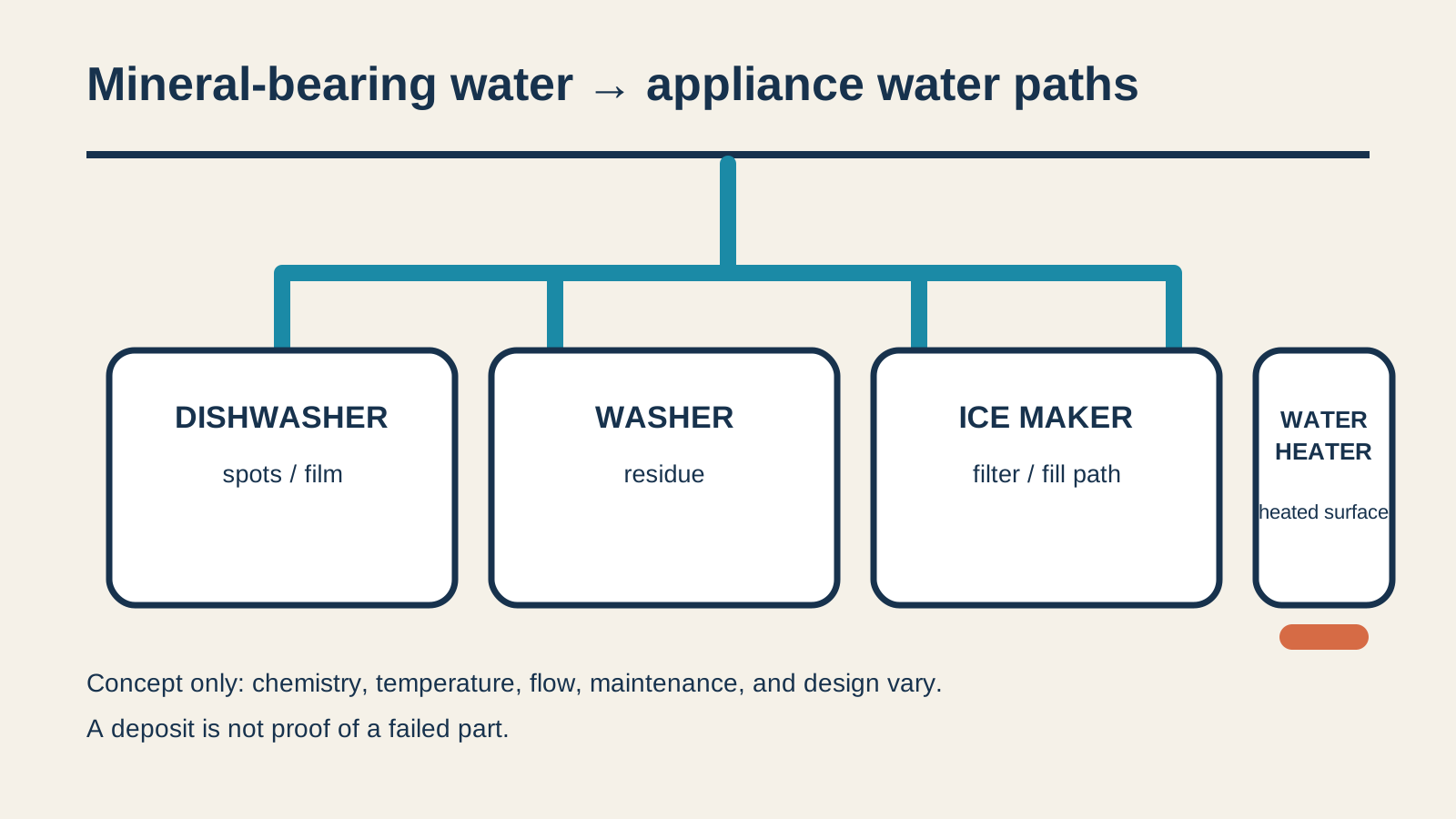
What hard water means—and what it does not prove
Water hardness is generally associated with dissolved calcium and magnesium. USGS describes hardness as a nuisance property rather than a health concern and notes that hard water can leave soap scum, spots or film, and mineral deposits in plumbing and water heaters.[1] Those observations justify checking water quality and appliance instructions; they are not a diagnosis of a failed component.
Scale is more likely to matter where water is heated, dries on a surface, or passes through a narrow opening. EPA WaterSense explains that scale can form on plumbing fixtures and appliances and that deposits can reduce flow or heat-transfer performance. It also cautions that water softeners are not needed in every home and do not typically treat unrelated contaminants.[2]
Start with the water source, not a regional assumption
There is no single “Wesley Chapel water” result that can be applied to every address. Pasco County’s water-service GIS description covers private and municipal providers, and the county publishes water-quality reports by named system or service area.[3][4]
The Pasco County Regional Water System’s report is evidence about that named public system and its reporting period—not proof about every property in Wesley Chapel, another utility, a private well, or water after it travels through building plumbing. Use the county’s Water Quality Reports page and its water-service-area GIS layer to identify the relevant provider or service area for the address.
A careful verification sequence
- Identify the source/provider. Check utility records, bill, service-area map, or well documentation. Do not infer the provider from the city name alone.
- Read the matching report. Use the named public system’s current report and look for hardness information if reported.
- Measure before changing equipment. For a private well or address-specific question, use an appropriate laboratory or qualified water professional.
- Compare with the appliance manual. Follow model-specific cleaning, filter, detergent, salt and descaling instructions.
- Separate water evidence from appliance evidence. A scale mark does not establish that scale caused the symptom.
Dishwashers: spots, film and restricted water paths
Hard-water residue can show up as spots or film on glassware, while scale may collect where water passes through small openings or heated water evaporates. USGS specifically uses dishwasher spots and film as an example of hard-water residue.[1] Check model instructions before assuming a component failed. Use the dishwasher symptom guide; hardness alone does not identify the cause.
Washing machines: residue is not a diagnosis
Mineral residue and soap interactions can make laundering less effective or leave deposits. EPA WaterSense notes that hard water can make soap and detergents work less effectively and can contribute to scale on appliances.[2] Slow filling, poor draining, vibration or leaking may have unrelated causes. See the washer and dryer guide.
Ice makers and refrigerators: trace the water path carefully
Ice makers and dispensers have narrow water paths and filters requiring model-specific maintenance. A mineral deposit may affect a path, but slow fill, small cubes, leaking or no ice can also involve the filter, valve, temperature, controls or frozen tubing. Follow the manual; do not remove sealed refrigeration panels or handle refrigerant. If food temperature rises, protect perishables first with the refrigerator food-safety guide.
Water heaters: heated surfaces deserve attention
USGS notes that heating hard water can form calcium-carbonate deposits and that scale can lower heating efficiency, raise heating costs, reduce equipment life and restrict flow.[1] EPA likewise describes scale as a concern for water heaters.[2] These are general mechanisms, not proof that a particular heater has scale.
Before changing treatment equipment
Establish whether hardness is documented for the address and whether treatment fits the water source. EPA says softeners can use water and salt during regeneration, may be restricted, and do not typically treat other contaminants.[2] For public water, use the correct utility report; for private wells, start with Florida DOH well-testing guidance. This guide does not recommend a product, installer, setting or universal treatment plan.
Frequently asked questions
Does a Pasco County water report prove the water at my address is hard?
No. It applies to the named public-water system and reporting period. Confirm provider and address first.
Can hard water diagnose an appliance failure?
No. Mineral residue or scale can be one contributing condition, but it does not identify a failed part.
What should a private-well household do first?
Use Florida Department of Health private-well guidance and arrange appropriate testing. Hardness does not test for bacteria or nitrate.
Sources
- U.S. Geological Survey, “Hardness of Water”.
- U.S. Environmental Protection Agency WaterSense, “Soften Water Without Wasting It”.
- Pasco County Utilities GIS, “Water Service Areas”.
- Pasco County Utilities, “Water Quality Reports”.
- Florida Department of Health, “Private Well Water Testing”.