When to stop using the dryer
Do not treat a burning odor as a normal part of drying. Stop using the machine when the odor is strong, returns after an accessible lint-screen check, or arrives with another warning sign:
- Smoke, visible scorching, sparks, or a tripped breaker.
- A hot electrical or melting-plastic odor.
- The cabinet, cord, plug, wall outlet, or nearby wall feels abnormally hot.
- The drum stops turning while heat continues, or the dryer makes a new grinding or squealing sound.
- A gas odor near a gas dryer.
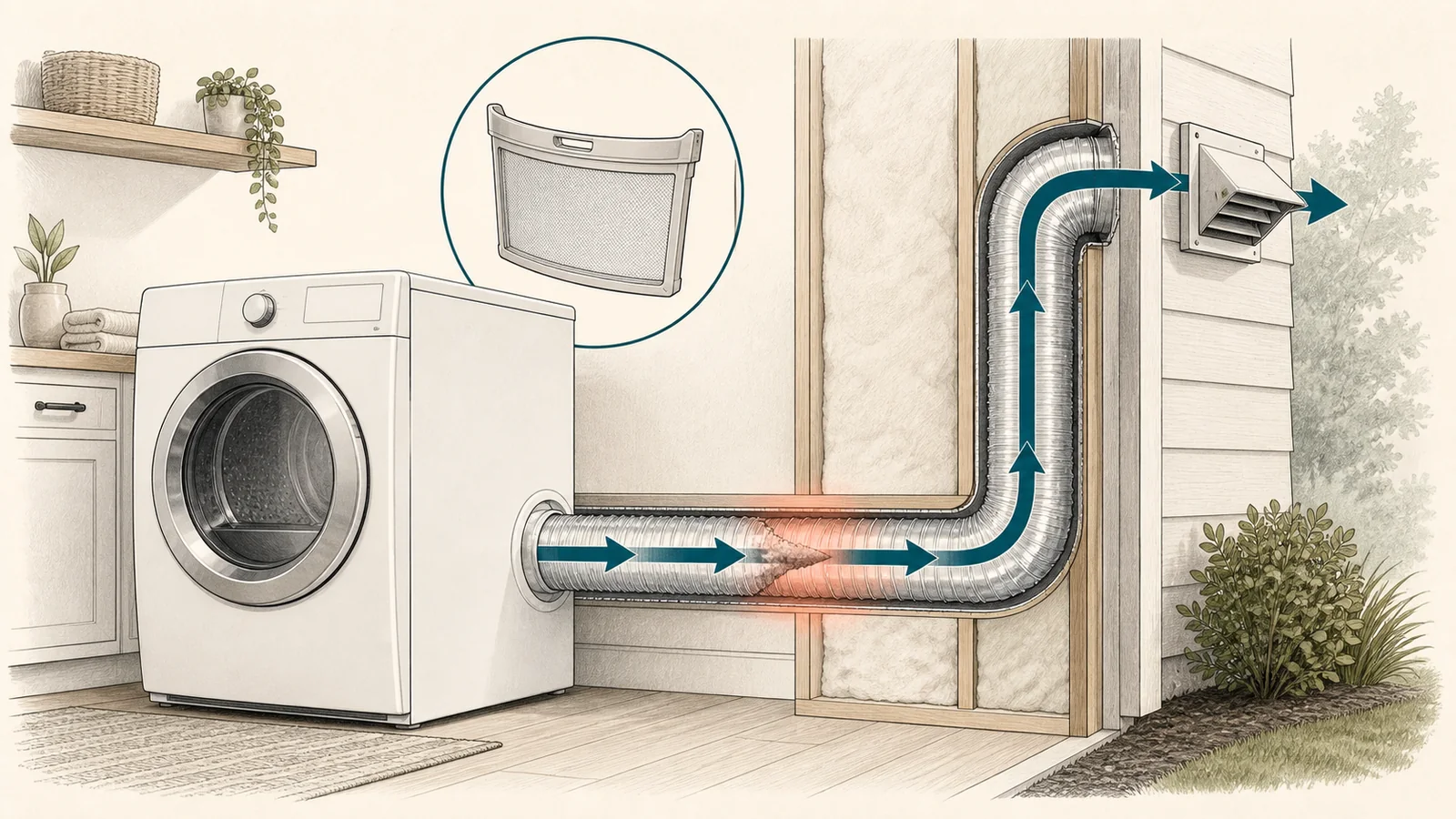
The U.S. Consumer Product Safety Commission warns that lint in a dryer or exhaust duct can block airflow, create excessive heat, and contribute to fire risk.[1] The U.S. Fire Administration advises using the dryer only with its lint filter installed and cleaning that filter before and after each cycle.[2]
Safe checks after the dryer is off
Wait for the dryer and load to cool. Keep the inspection limited to areas designed for routine access.
- Check the lint screen. Remove lint from the screen and confirm it is not torn, warped, or coated with residue. Reinstall it before any future use.
- Look at the clothes. Check for a melted item, crayon, rubber-backed mat, oily rag, or other object that could create odor or retain heat. Do not pile hot or smoky laundry together.
- Observe the exterior vent hood. From outside, look for a blocked or damaged flap, heavy lint at the opening, or landscaping obstructing the outlet. Do not reach into inaccessible ductwork.
- Check the accessible power connection. Without dismantling anything, look for discoloration, melting, looseness, or scorching at the plug and outlet. Do not touch a damaged connection or reset a repeatedly tripping breaker.
USFA recommends professional installation and service, a metal vent pipe rather than plastic, and a vent path that is not restricted.[2] The exact duct route may be hidden in a wall or ceiling, so weak airflow at the exterior hood does not tell you where a restriction is located.
Ventless and heat-pump dryers do not use the same exterior exhaust arrangement. Follow that model's maintenance instructions instead of assuming an exterior hood should be present.
What the smell can and cannot tell you
Odor descriptions help a technician narrow the inspection, but they do not prove a cause. A dusty smell during the first use after a long idle period is different from sharp electrical odor, hot rubber, smoke, or recurring scorch smell. Note when the odor starts, whether the drum turns normally, whether clothes take longer to dry, and whether airflow is visible at the exterior hood.
Do not remove the dryer cabinet, bypass a thermal fuse or door switch, disconnect gas fittings, probe live wiring, or push a brush through concealed ductwork without knowing its route. Those steps can create a second problem while hiding the first.
When qualified inspection makes sense
Arrange inspection before another cycle when the odor repeats, accessible airflow looks weak, drying time has increased, the dryer overheats, or any electrical, motor, belt, gas, or internal-lint condition is possible. Have the model number, fuel type, vent length if known, symptom timeline, and any breaker behavior ready.
Wesley Chapel Appliance is not currently accepting or routing service requests. Use the washer and dryer symptom guide to organize observations and the repair-or-replace guide if a diagnosis later leads to a larger decision.
Frequently asked questions
Can I run the dryer again after cleaning the lint screen?
Not if smoke, scorching, arcing, a strong electrical odor, unusual cabinet heat, or a repeated burning smell remains. Leave it off and arrange qualified inspection.
Does a burning smell always mean lint is trapped in the vent?
No. Restricted airflow is one possibility, but belts, motors, wiring, foreign objects, residues, and other conditions can produce heat or odor. A smell alone does not diagnose the cause.
Should I open the dryer cabinet to look for lint?
Not as a routine homeowner check. Internal inspection can expose electrical, gas, moving, and sharp components. Keep checks to accessible areas unless manufacturer documentation specifically directs otherwise.
Sources
- U.S. Consumer Product Safety Commission, “Overheated Clothes Dryers Can Cause Fires”.
- U.S. Fire Administration, “Clothes Dryer Fire Safety”.
- NFPA Research, “Home fires involving clothes dryers and washing machines”.